


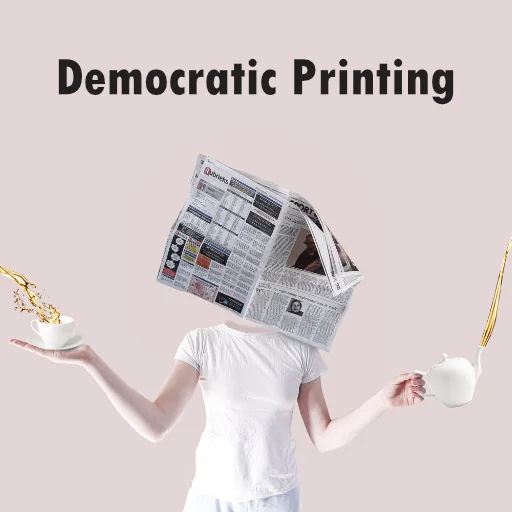
In an age where polarisation seems to touch every corner of society, the notion of democracy in business printing stands as a beacon of inclusivity and diversity. Imagine a small printing company bustling with activity, its machines humming harmoniously as they produce materials for clients across the political spectrum. Here, the ink on paper isn’t just a medium for ideas; it’s a testament to a business model that upholds the principles of democracy, embracing varied perspectives and fostering open dialogue.
The concept of “Democratic Printing” challenges the status quo, encouraging businesses to prioritise freedom of expression over divisive partisanship. By refusing to discriminate based on political beliefs, this approach not only champions the values of a democratic society but also strengthens community ties. In an environment where opinions can differ as widely as the colours in a Pantone chart, ensuring every voice has the opportunity to be heard is not just an ideal—it’s a practice that fortifies the fabric of our shared civic life.
Embracing Diversity in Business Printing
Democracy thrives on the interplay of diverse viewpoints, and business printing is no exception. In a world where branding, marketing, and communication materials shape public discourse, a printing company that welcomes clients from every corner of the political spectrum demonstrates its commitment to pluralism. Rather than selecting partners based on ideology, Democratic Printing firms prioritise the free flow of ideas, allowing conservative, liberal, libertarian, and independent voices alike to bring their campaigns, flyers, and brochures to life.
For a small business, this inclusive stance requires both conviction and courage. Employees and leadership must embrace the fact that printed materials might champion causes they personally oppose—be it environmental regulations or tax reform. Yet, this very tension underscores the power of a democratic marketplace: it permits the coexistence of conflicting ideas under one roof. By printing for all—so long as the content remains within legal boundaries—businesses reinforce the principle that service should not be contingent on ideology. In doing so, they not only uphold democratic values but also expand their market reach, building a reputation for fairness and reliability in a politically charged climate.
The Role of Freedom of Expression in Democratic Printing
At the heart of any democracy lies the unassailable right to express one’s beliefs. Business printing plays a pivotal role in facilitating speech, enabling individuals and organisations to disseminate manifestos, campaign literature, or community newsletters. Democratic Printing businesses act as stewards of free expression, ensuring that even minority viewpoints can find a platform. By providing printing services without prejudice, these companies safeguard the essential democratic principle that every citizen’s voice is worthy of amplification.
Freedom of expression in printing also demands clear policies and ethical guidelines. Companies must draw the line at hate speech, defamation, or incitement to violence, abiding by legal frameworks while resisting political pressure to silence dissenting opinions. This balanced approach preserves a marketplace of ideas where robust debate can occur. Upholding such standards not only affirms the business’s integrity but also contributes to a healthier democratic ecosystem, one where disagreement is met with dialogue rather than censorship.
Upholding Democratic Values in the Workplace
A truly democratic printing business extends its commitment to democracy inward, creating an environment where employees feel empowered to share their perspectives. Encouraging staff to voice opinions on workflow processes, marketing strategies, or community outreach initiatives fosters a sense of ownership and collective responsibility. When team members of varied backgrounds collaborate, innovation flourishes, and problem-solving becomes more creative, reflecting the richness of their experiences.
Implementing open-door policies, regular town hall meetings, and anonymous suggestion boxes can institutionalise this culture of participation. Small businesses may question which clients they print for, but by asking employees for input on challenging jobs—always ensuring compliance with hate-speech laws—they model democratic decision-making. Such practices not only boost morale and retention but also signal to clients that they’re partnering with a company that practices what it preaches about democracy and fairness.
Impact of Political Neutrality on Client Relationships
Neutrality in a politically charged market can feel like walking a tightrope, yet it is crucial for businesses aiming to serve a diverse clientele. When a printing company commits to providing services regardless of the political leanings of its customers, it establishes trust and credibility. Clients know they won’t face arbitrary refusals, so they feel confident in bringing their projects—be it campaign posters or ballot guides—to a printer that respects their democratic rights.
This posture of impartiality can translate into long-term loyalty. Word-of-mouth referrals often emphasise a company’s fair-mindedness, leading to a broader client base. Moreover, the perception of political neutrality differentiates a business in a crowded market, appealing especially to organisations that value nonpartisan professionalism. By maintaining consistent quality and transparent policies, printers reinforce the message that in a democracy, everyone’s message deserves to be seen.
Strengthening Community Bonds Through Diverse Printing Services
Business printing is more than a transaction—it’s a service that underpins community engagement. From local election flyers to school event programs, printed materials foster civic participation. When a Democratic Printing company offers affordable, accessible printing options, it actively contributes to a more informed and connected community. By partnering with nonprofits, neighbourhood associations, or municipal offices, these businesses help amplify grassroots efforts.
Diverse printing services, such as multilingual brochures or ADA-compliant handouts, ensure that information reaches all demographic groups. This inclusivity reinforces the democratic ideal of equal access. When residents see their culture and language represented in printed materials, they feel recognised and respected. In turn, this sense of belonging can spur greater civic involvement, whether through voter registration drives or community cleanups, strengthening the social fabric.
Promoting Open Dialogue and Exchange of Ideas
Open dialogue is the lifeblood of democracy, and printed media remains a vital conduit for discussion. Whether through opinion pamphlets, community newsletters, or informational booklets, print sparks conversations that might not occur in purely digital spaces. A printing partner that actively encourages balanced content—inviting letters to the editor or facilitating printed forums—amplifies this role, turning its shop into a hub for idea exchange.
By hosting in-person events like print-preview sessions or public art exhibitions, Democratic Printing businesses create physical spaces where community members can interact. These gatherings foster face-to-face discussions, breaking down online echo chambers. The tangible nature of print—held in hand, posted on bulletin boards—provides a permanent record of debate, preserving dialogue for future reference. In nurturing these exchanges, printers become catalysts for informed citizenship and mutual understanding.
Conclusion: The Future of Democracy in Business Printing
As we navigate an era of deep political divides, the ethos of Democratic Printing offers a blueprint for unity and respect. By embracing diversity, championing freedom of expression, and upholding neutrality, printing businesses can play an indispensable role in sustaining a vibrant democratic culture.
Looking ahead, continued innovation in inclusive printing services will further strengthen community bonds, ensuring that every voice—regardless of ideology—finds its place on the page. In the interplay of ideas and ink, democracy endures.