
Additional Information:
gsm = Grams Per Square Meter
The higher the gsm the thicker/heavier the media.
Silk, Uncoated etc is the feel of the media
Mic = Micron (the higher the Micron the more rigid it is)
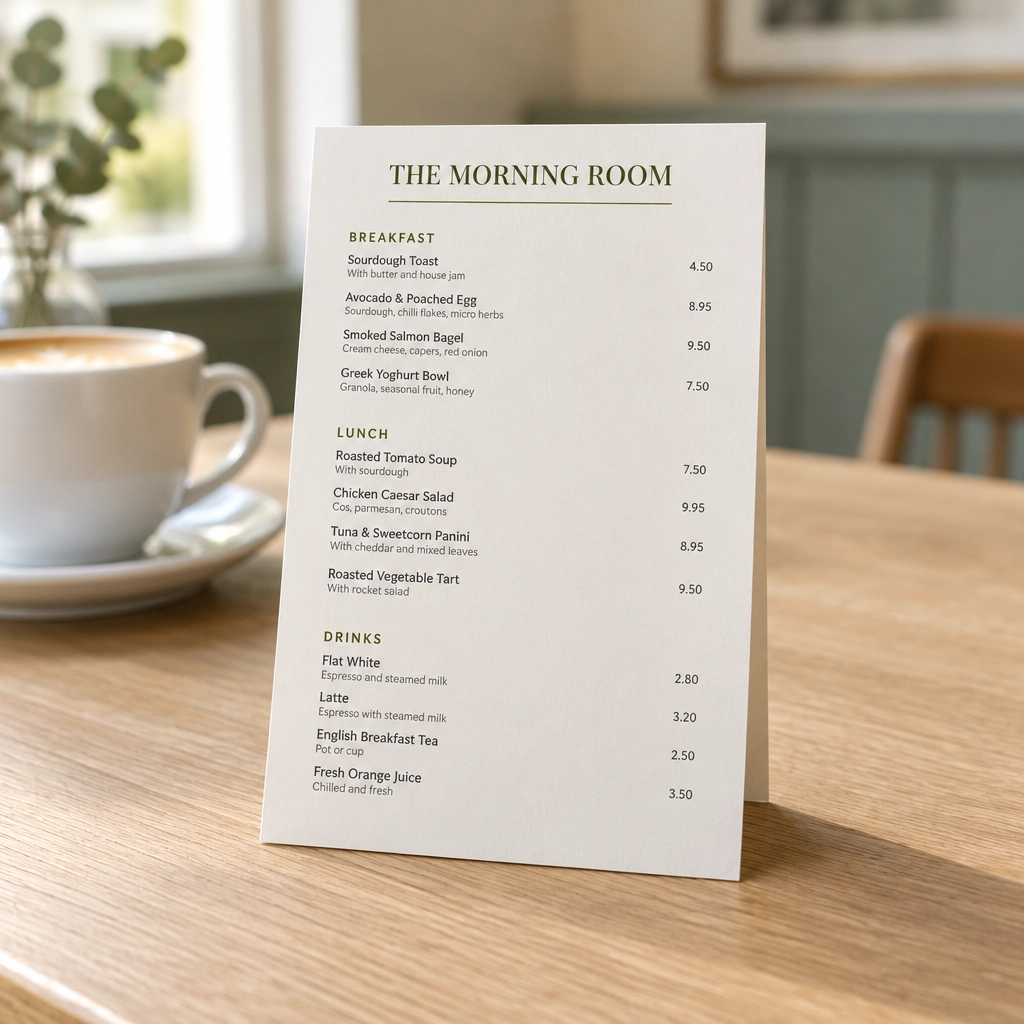
A5 Menus
A5 is the size most cafes and small kitchens land on. At 148 × 210mm there is enough room for a full list of dishes at a readable size, and the sheet still fits in a hand, on a small table, or in the bag with a takeaway. It is also the size that costs least to replace when the menu changes with the seasons.
- Paper size A5, 148 × 210mm
- Artwork with bleed 154 × 216mm, allowing 3mm on every edge
- Media 130gsm Silk through to Waterproof 365gsm (270 Mic)
- Lamination Optional on thicker silk media
- Sides Single sided or double sided
Why A5 suits a menu
A5 is the compromise that works. A4 gives you more room, but on a small table it takes up half the space in front of the customer, and it looks like a document rather than a menu. A5 sits just above the cutlery, reads at a comfortable distance, and holds a single column of dishes with the prices lined up beside them.
It is also the practical size for anywhere that changes the menu often. A cafe printing a summer list and a winter list, a kitchen running separate lunch and evening menus, or a takeaway updating prices twice a year: A5 keeps the reprint cost low enough that nobody puts off the update.
Choosing a media for a menu
Menus get handled harder than almost any other print job. Wet hands, wiped over, dropped on the floor, stacked in a pile. The paper matters more here than it does on a leaflet.
Waterproof. 260gsm or 365gsm synthetic stock, at 195 and 270 micron. This is the one for anything used at the table through a whole service. It takes a spill and a wipe and does not cockle the way paper does. The 365gsm version is more rigid, which makes it easier to handle and harder to crease.
Heavy card. 300gsm Uncoated, 350gsm Silk, 300gsm or 400gsm Artboard. Substantial in the hand and cheaper than waterproof. These are the stocks that lamination becomes available on.
Lighter stocks. 130gsm and 150gsm Silk, 120gsm Uncoated. For a menu printed often and replaced: daily specials, a lunch list that changes weekly, or a takeaway sheet that goes out with the order. At these prices they do not need to survive a week.
Kraft and Gesso are available too. Kraft for a warm natural look that suits a cafe or a rural pub, and Gesso for a textured surface that makes a menu feel considered before it has been read.
Lamination, and when it becomes an option
Lamination is the other way to make a menu last. It seals the print behind a film, so spills wipe off and the sheet stops absorbing anything, and a card menu keeps looking new far longer than an uncoated one.
It is only available on the thicker silk media. Lamination needs a heavier sheet underneath it, so the option appears once you have chosen one of those stocks. Pick a lighter paper and it will not be offered, which is deliberate: a film over a thin sheet curls at the corners the moment the room warms up.
The practical choice is between waterproof media and laminated card. Waterproof is synthetic all the way through, so it can be wiped and stacked without a film to peel. Laminated card feels more like a proper menu in the hand and prints with a deeper finish. Menus that live on the tables all day usually suit waterproof; menus handed out and brought back tend to look better laminated.
Getting the artwork right
An A5 menu is a small page, so there is less room to absorb a mistake. A few checks before you upload:
- Supply at 154 × 216mm, which is A5 plus 3mm of bleed on every edge.
- Keep text at least 5mm inside the trim, and further in for anything near the edge.
- Set body text large enough to read across a table. 10pt is the minimum on A5, and 11pt is better.
- Keep it to one column. Two columns on A5 squeezes the type and makes prices hard to scan.
- Line the prices up so they sit in a single vertical run. A menu with prices at different widths looks careless.
- Check your photographs at full size. A shot that looked fine on a phone can look soft across an A5 page.
- Send one print-ready PDF, single pages rather than spreads.
If you would rather hand it over, our graphic design team will lay the dishes and prices out properly for the size and keep the file on record, so a seasonal change is a quick edit rather than a new design.
Where A5 menus get used
- Cafes and coffee shops, for breakfast and lunch lists
- Pubs, for a smaller food menu or a bar snack list
- Takeaways and delis, for the menu that goes out with the order
- Hotels and guest houses, for a room folder or a breakfast card
- Mobile caterers and pop-ups, for a menu that packs flat and travels
- Supper clubs and small kitchens, for a short set menu
If you have more dishes than A5 will take comfortably, the A4 menus give you twice the surface, and the A3 menus are built for menus read from across a room. For a menu that closes down, there are the folded menus. Everything sits in our menu printing category.
Turnaround and delivery
Order between 10 and 10,000. Despatch is 3 to 5 working days from artwork approval, with a 2 working day and a 1 working day option when you are reopening on Friday. Collect from West Street in Tavistock, or have them delivered anywhere in the UK.