
Choosing card stock and a format is only part of planning a greeting-card order. The design, writing surface, quantity and timing all affect how useful the finished cards will be. Two points are easy to overlook: blank cards need to work for more than one occasion, and Christmas ranges need planning well before December.
Blank cards need to suit more than one occasion
A blank greeting card is designed to be used for many reasons, while an occasion card is made for a particular event. That difference should shape the artwork from the start.
A birthday card can say “Happy Birthday” on the cover. A blank card needs a design that still feels right for a thank-you, a note of support or a message with no particular occasion attached. Its job is to create a welcoming space for the sender’s words, rather than to supply the message itself.
For a versatile blank range, consider:
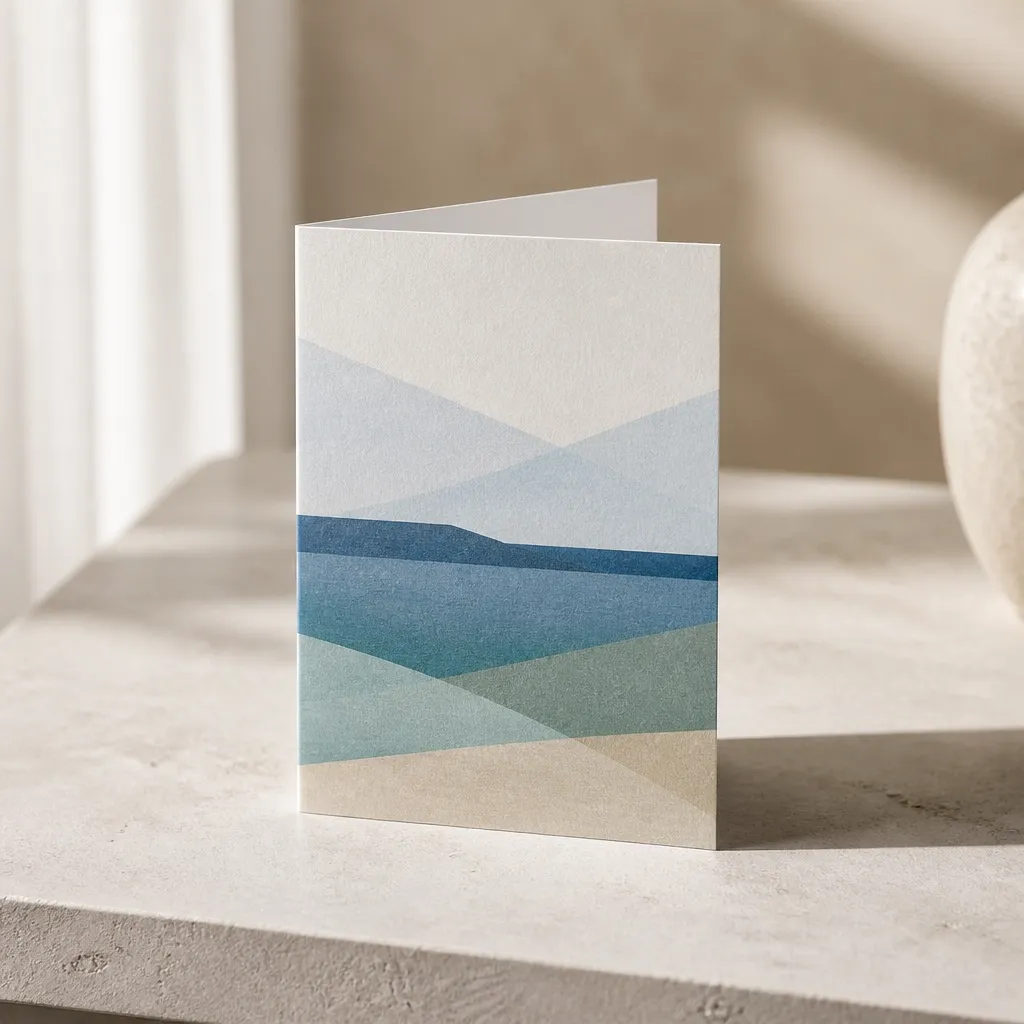
- Artwork with a broad appeal, such as a landscape, botanical illustration, abstract pattern or characterful image.
- A clear cover design that feels finished without relying on occasion wording.
- An open inside, with enough room for a personal message.
- A consistent visual style across designs, while giving each card its own subject or colour palette.
Occasion cards can be more specific. Seasonal cues, celebratory motifs and a short printed greeting help the recipient understand what the card is for. Blank cards benefit from restraint: the design can be distinctive, but it should leave space for the sender to make the message personal.
Our greeting card printing options include formats for single designs and wider collections. Whichever route you take, it helps to decide first whether the card is meant for one moment or many.
Choose a surface that is practical to write on
For cards people are likely to write inside, 300gsm Uncoated is a useful option to consider. Its uncoated surface is generally more receptive to handwriting than a coated finish, so it suits personal notes, signatures and messages added by a shop or maker.
By contrast, 350gsm Silk has a smooth, coated surface. Ink can sit on that coating for longer rather than soaking in quickly. A fountain pen or gel pen may therefore take longer to dry and can smear if the card is handled too soon. The result depends on the pen and the amount of ink, so it is sensible to test the actual combination before ordering a large run.
There are other choices on the live range too: 400gsm Artboard, 280gsm Kraft and 300gsm Gesso. Think about the finished card’s purpose as well as its appearance. A glossy or laminated surface may suit a vivid illustration, for example, but it may not be the easiest place to write. The available lamination choices are none, matt, gloss and soft touch; check the live options for the combination you want.
A card intended for a handwritten note should make writing feel straightforward, not like an afterthought.

Build a mixed retail range with quantities in mind
Makers, illustrators and shops often want several designs in one range. Using a shared size and paper stock can make a collection feel cohesive, while different illustrations give customers a choice.
Before placing an order, map out the range:
- List each design and the quantity needed for it.
- Decide whether every design will use the same format and media.
- Keep the artwork files clearly named, so each design can be checked against its finished card.
- Confirm how the order quantity applies when submitting multiple designs.
The ordering system cannot detect multi-page files or automatically divide a total quantity between designs. The quantity selected applies per design. For example, selecting 20 cards for each of five designs means planning for 100 cards in total, not 20 cards shared across the collection. Check the selection carefully and make sure the quantities match your intended stock.
That detail matters when you are balancing a broad range against storage space, display capacity or a first test run. A clear list of designs and quantities makes the order easier to review before artwork is submitted.
Plan Christmas cards in autumn, not December
Christmas cards are seasonal, so the useful window for ordering comes before the busiest part of the season. For businesses, autumn gives time to settle the design, check names and messages, confirm quantities, approve artwork and allow for printing, packing and posting. Waiting until December leaves less room for those practical steps.
A two-wave approach can help organisations manage different audiences:
- A larger run for clients and customers, with a consistent business message and artwork.
- A smaller staff set, which can include a more personal greeting or be signed by the team.
Planning both groups together makes it easier to keep the visual identity consistent while tailoring the message. It also helps avoid ordering too many of one version and not enough of another.
Envelope choice contributes to the overall presentation. White envelopes are a clean, familiar option for posting. Kraft envelopes offer a warmer, hand-finished look that can complement natural or illustrated artwork. Check which options are available for the chosen card format when you place an order.
For a Christmas range, decide early whether you want a traditional seasonal design, a more understated winter image or a business greeting that feels appropriate to a broad mix of recipients. Then work backwards from when the cards need to arrive, leaving time for proofing and delivery.

Choose a format in plain English
The available finished formats are A7, A6, A5, 5×7 and 148×148mm square. All are flat digital prints that are then scored and folded. The best size depends on the artwork, the message and how the card will be used.
- A6 is a practical all-rounder. Its familiar size is well suited to a greeting that will be posted at a standard letter rate, provided it meets the current size and weight limits.
- 5×7 gives an illustrated design more room and is a familiar portrait format for a retail range.
- A7 is compact and works well as a short note or enclosure with a gift or order.
- A5 offers more space for artwork and a longer message. It can make a more substantial posted greeting, so check postage requirements for the finished card and envelope.
- 148×148mm square gives artwork equal proportions and suits designs composed around a central image. As with A5, check the postal requirements before sending.
Postage depends on the finished item, including its envelope, dimensions and weight. If a particular postal rate matters to your plans, check the current rules before settling on the format.

Prepare the artwork as a flat layout
Bleed is extra artwork beyond the edge where the card will be trimmed. It lets background colours and images reach the cut edge, even if the trim shifts slightly during production. For these cards, artwork needs 3mm bleed on every outer edge.
A folded card is printed as one flat sheet, then scored and folded. Plan the full sheet before exporting the file. It needs to account for the front cover, back panel, both inside pages and the score line. The score line is the crease where the card folds; keep small text and important details away from it so they do not sit awkwardly across the fold.
A useful check is to make a paper mock-up:
- Mark which panels are the front, back and inside.
- Fold it in the intended direction.
- Check that every panel is the right way up.
- Confirm that artwork crossing the fold still looks intentional.
- Make sure any handwritten message has enough clear space.
The required flat artwork dimensions vary by finished format, so check the live product instructions before preparing a file. If you want support developing a card design or a consistent set of designs, our graphic design service can help with artwork for print.
Bring the decisions together
Start by deciding whether the card is blank or for a particular occasion. Then choose a surface that suits the way it will be used, plan each design and quantity, and select a format that works for both the artwork and its destination. For Christmas, begin in autumn and allow time for approvals and delivery.
Finally, check the flat artwork, bleed, panels and score line before submitting. A little planning makes it easier to produce a card range that looks considered, feels right in the hand and gives its recipient room for a thoughtful message.