
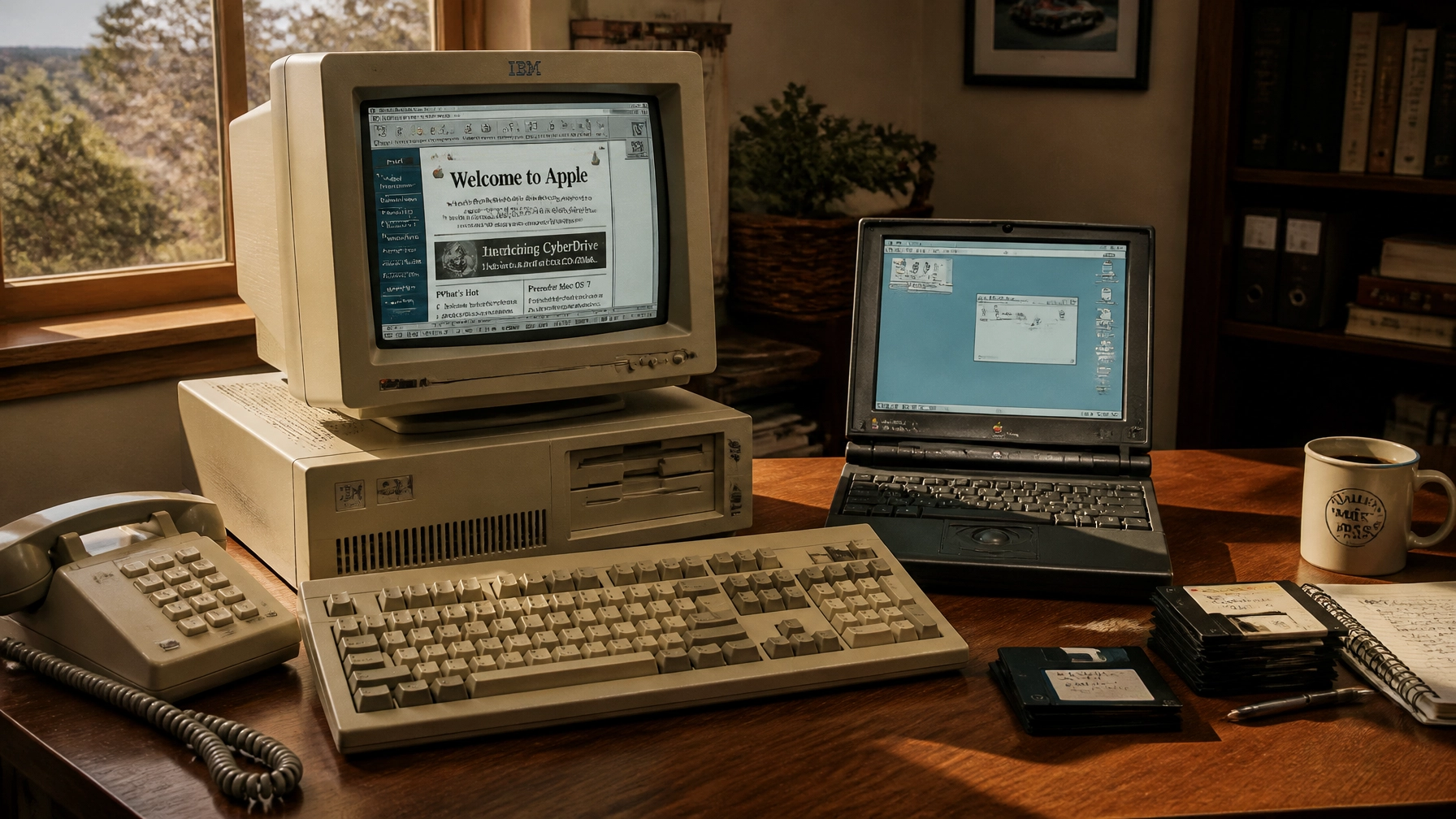
Do you remember where you were in 1991? While some of us were busy recording the Top 40 off the radio or wondering if those new-fangled "compact discs" would ever really catch on, a quiet revolution was happening in laboratories and home offices around the world.
1991 was a watershed year for technology. It wasn't just about big hair and neon tracksuits; it was the year the blueprint for our modern, connected lives was drafted. From the way we browse the internet to the security of our private data, many of the tools we use at ABC Service to keep your businesses running smoothly trace their roots directly back to this single, incredible year.
As part of our new weekly series looking at the history of tech, we are diving deep into 1991. We want to show you how these thirty-year-old innovations are still the "engines under the bonnet" for almost everything we do today.
1. The World Wide Web goes public
It is hard to imagine a world without "www," but before August 1991, the World Wide Web was largely a private project at CERN. When Tim Berners-Lee opened the doors to the public, he didn't just launch a website; he launched a new way for humanity to share information.
Today, we take for granted that we can find a local plumber in Tavistock or order supplies for an office in Plymouth with a few clicks. That first website was a simple text-based page explaining what the web was, and it set the standard for the web hosting and design services we provide today. Without that first "public" step, the digital economy as we know it simply wouldn't exist.
2. The Linux Kernel is born
On 25 August 1991, a Finnish student named Linus Torvalds posted a humble message on an electronic mailing list: "I’m doing a (free) operating system (just a hobby, won't be big and professional like gnu)."
He was wrong. It became massive. Linux now powers the vast majority of the world’s web servers, including the Virtual Private Servers we use to host our clients' websites. If you use an Android phone, you are using a descendant of that 1991 hobby project. It proved that collaborative, open-source software could be robust, secure, and world-changing.

3. The Internet opens for commercial use
Before 1991, the internet was strictly for research and academic purposes. The National Science Foundation (NSF) had a "no-commerce" policy. In 1991, that restriction was lifted.
This was the "Big Bang" for business. It allowed the first commercial Internet Service Providers (ISPs) to emerge. Today, when we install business broadband or fibre solutions for our local Devon and Cornwall partners, we are building on the freedom established in 1991. It turned the internet from a library into a marketplace.
4. PGP Encryption (Pretty Good Privacy)
In a world where we are constantly worried about data breaches, we owe a lot to Phil Zimmermann. In 1991, he released PGP, the first widely available program to use "public-key" encryption.
This allowed ordinary people to send secure, private messages for the first time. We still use the principles of PGP every day to secure emails and protect sensitive business data. At ABC Service, we believe keeping your data secure is a fundamental right, and we still look back to 1991 as the year that digital privacy became accessible to everyone.
5. The world’s first webcam – The Trojan Room Coffee Pot
Perhaps the most "relatable" tech innovation of 1991 happened at the University of Cambridge. Tired of walking all the way to the breakroom only to find the coffee pot empty, researchers set up a camera that sent a grainy, greyscale image of the pot to their computer screens.
This was the very first webcam. While it seems like a bit of fun, it was the first time a physical object was monitored remotely in real-time over a network. Today, we use this same concept for everything from complete WiFi solutions that manage office security to the video calls that keep remote teams connected.

6. The birth of the modern laptop – Apple PowerBook 100
While portable computers existed before 1991, they were often "luggable" suitcases rather than true laptops. In October 1991, Apple released the PowerBook 100 series.
It was the first laptop to move the keyboard back toward the screen, leaving room for palm rests and a central pointing device (a trackball). Every MacBook or Windows laptop you see in our Tavistock shop today follows this basic design. It made mobile working a reality for SMEs and growing organisations, allowing us to take our work home or to the local café without needing a trolley to move our gear.
7. GSM goes live
1991 saw the first ever call made on a GSM (Global System for Mobile Communications) network. This standard was revolutionary because it allowed for roaming and, eventually, SMS text messaging.
We often help businesses move away from traditional landlines toward digital VOIP phone systems, but it was the mobile standards of 1991 that first taught us the value of being reachable anywhere. It was the beginning of the end for being "tethered" to a desk.
8. Digital Colour Scanning for the masses
In 1991, HP released the Scanjet IIc. It was the first "single-pass" colour scanner that was affordable enough for a small office. Before this, digitising a colour photo was a slow, expensive process reserved for specialist print shops.
This innovation changed how we handle documents forever. It allowed businesses to start moving away from physical filing cabinets and toward digital archives. In our printing department, we still use high-speed, high-resolution scanning to help local Devon businesses digitise their legacy documents or create stunning graphic designs from physical artwork.

9. Adobe Premiere 1.0
The way we consume video today: from YouTube tutorials to social media ads: started in 1991 with the release of Adobe Premiere 1.0. It was one of the first programs to allow digital video editing on a standard personal computer.
Before this, video editing required a room full of expensive hardware. Now, digital video is an essential tool for marketing any business. Whether we are helping a client with logo creation or setting up a workstation for a content creator, we are standing on the shoulders of the digital video revolution that began in '91.
10. The Digital Answering Machine
While it might seem like a small thing, the invention of the first purely digital answering machine in 1991 was a huge leap for telecoms. By removing the need for magnetic tapes, it made voicemail faster, more reliable, and eventually, something that could be integrated into our computer systems.
Today, our Swift phone systems use advanced digital voicemail-to-email features. It’s a direct evolution of that first tape-free machine from 1991, ensuring you never miss a message from a client, even when you're out of the office.

Why 1991 matters to us today
When we look back at these innovations, we don't just see "old tech." We see the foundations of the reliable, honest service we strive to provide every day. 1991 was the year that technology started to become truly personal and truly "business-ready."
At ABC Service, we believe in being more than just a faceless tech provider. We are your responsible local partner, helping you navigate the complexities of modern IT, printing, and telecoms by drawing on decades of industry evolution. Whether you need a computer repair in Tavistock or a UK-wide wholesale printing order, we apply the same first-class care and technical expertise that has been building since those first lines of Linux code were written.
Key Takeaways
- Foundation of the Web: The 1991 public launch of the WWW is why your business has a digital "shop window" today.
- Mobility: Laptop designs and GSM standards from '91 paved the way for modern flexible working.
- Security: Encryption tools like PGP established the privacy standards we still fight for today.
- Efficiency: Digital scanning and video editing moved high-end production into the reach of SMEs.
If your current setup feels like it’s stuck in 1991: or if you just want to make sure you’re using the latest 2026 versions of these classic innovations: give us a shout. We’d be more than happy to help your organisation run smoothly with a first-class, local touch.