
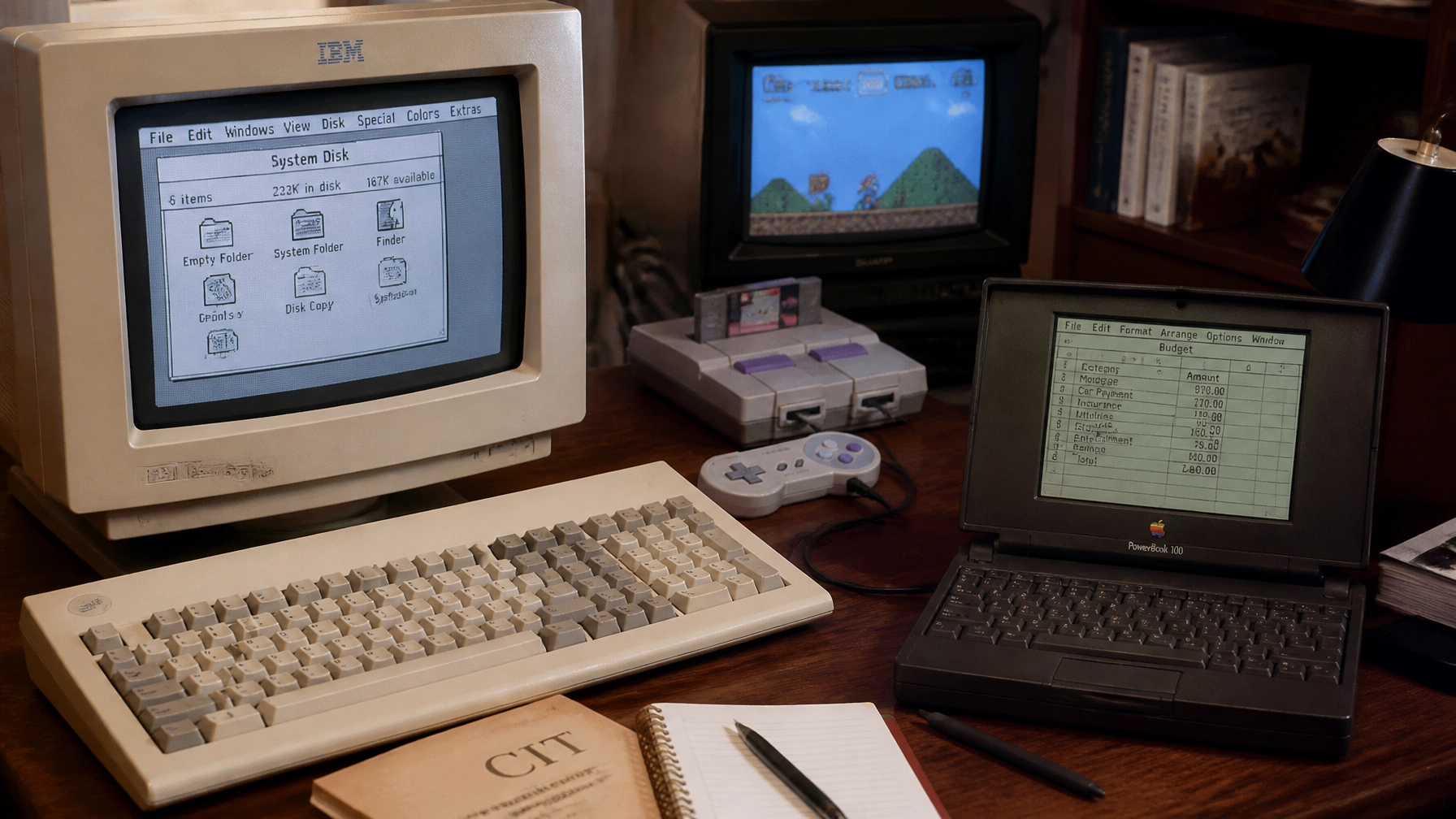
Welcome to the very first entry in our new series, Year by Year, Tech History. Every week, we are going to take a nostalgic trip back in time to explore the milestones that shaped the digital world we live in today. To kick things off, we are heading back thirty-five years to 1991: a year that arguably laid the very foundations of the modern internet and personal computing.
In 1991, the world felt quite different. The Soviet Union was dissolving, "Everything I Do (I Do It for You)" by Bryan Adams was dominating the UK charts for a record-breaking 16 weeks, and most of us were still using fax machines and chunky landlines to communicate. Yet, behind the scenes in laboratories and bedrooms across the globe, a handful of brilliant minds were releasing the tools that would change human history forever.
The birth of the World Wide Web, 6 August 1991
If you are reading this blog post today, it is because of an event that happened on 6 August 1991. On this day, a British computer scientist named Tim Berners-Lee, working at CERN in Switzerland, published a short summary of his "WorldWideWeb" project on the alt.hypertext newsgroup.
This was the moment the World Wide Web became a public service.

It is easy to forget that the Internet and the World Wide Web are not the same thing. The Internet: the underlying network of computers: had existed for some time, but it was difficult to navigate. Berners-Lee’s genius was in creating a system of "hypertext" that allowed documents to be linked together via URLs, viewed through a browser, and transmitted using the HTTP protocol.
The very first web page was incredibly simple, explaining what the web was and how to use it. There were no images, no videos, and certainly no social media. It was purely educational. It is incredible to think how far we have come from those text-based roots. Today, at ABC Service, we help businesses navigate this same digital landscape through our professional web hosting and design services, ensuring that the websites of today are a far cry from the grey backgrounds of 1991.
Linux, A "hobby" that conquered the world
Just a few weeks after the Web went public, another seismic shift occurred in the world of software. On 25 August 1991, a 21-year-old Finnish student named Linus Torvalds sent a famous message to a newsgroup:
"I'm doing a (free) operating system (just a hobby, won't be big and professional like gnu) for 386(486) AT clones."
That "hobby" was the Linux kernel.

Torvalds wanted to create a free alternative to the expensive Unix operating systems of the time. Because he chose to make the code open-source, developers from all over the planet began contributing to it. Today, Linux doesn't just run on "hobby" computers; it powers the vast majority of the world’s web servers, supercomputers, and even the Android phones in our pockets.
At ABC Service, our UK-based web hosting relies on the incredible stability and security that Linux-based systems provide. It is a fantastic example of how a collaborative, community-driven project can eventually support the global economy.
Hardware highlights, The Apple PowerBook 100
While the software world was being reinvented, the hardware world was also seeing some iconic releases. In October 1991, Apple introduced the PowerBook 100.
Before the PowerBook, "portable" computers were often the size of a suitcase and weighed nearly as much. The PowerBook 100 changed the game by introducing a design that we still recognise in modern laptops today.

What made it so special? It was one of the first laptops to feature a built-in trackball and, perhaps more importantly, palm rests. By pushing the keyboard back toward the screen, Apple created space for the user to rest their hands. It sounds like a small detail, but it revolutionised ergonomics.
We see plenty of laptops coming through our doors for computer repairs in Tavistock, and while they are much thinner and more powerful than the PowerBook 100, they all owe a debt of gratitude to this 1991 pioneer. It set the standard for mobile computing that we still follow decades later.
16-Bit brilliance, The SNES arrives in North America
For many of us, 1991 wasn't just about work and networking: it was about gaming. In August 1991, the Super Nintendo Entertainment System (SNES) launched in North America, bringing 16-bit graphics and iconic sound to millions of living rooms.

The SNES wasn't just a toy; it represented a massive leap in technical capability. With the ability to display hundreds of colours on screen and advanced "Mode 7" scaling effects (which gave games a pseudo-3D look), it pushed the boundaries of what home electronics could do. Games like Super Mario World and The Legend of Zelda: A Link to the Past became instant classics.
At ABC Service, we love a bit of tech nostalgia, and we even offer custom tech wraps and stickers for those who want to give their modern consoles or laptops a bit of that classic 90s flair.
Software breakthroughs, Visual Basic, QuickTime, and System 7
The year was also packed with software releases that lowered the barriers to entry for both creators and users:
- Microsoft Visual Basic 1.0 (May 1991): This was a game-changer for programmers. It allowed people to create Windows applications using a "drag and drop" interface for buttons and windows. It made software development much more accessible to the average person.
- Apple System 7.0 (May 1991): This was a major upgrade for Macintosh users. It introduced built-in multitasking, allowing users to run more than one "programme" at a time: something we take completely for granted now, but was a revelation back then!
- Apple QuickTime 1.0 (December 1991): Before QuickTime, playing video on a computer was incredibly difficult and often required expensive hardware. QuickTime allowed standard computers to play digital video and audio, paving the way for the multimedia world we live in today.
The cultural shift, Why 1991 mattered
When we look back at 1991, we can see a clear shift in the global landscape. Connectivity and portability were the two big themes.
The launch of the Web and Linux meant that the "walls" around information were starting to come down. Knowledge was becoming decentralised. At the same time, hardware like the PowerBook meant that work was no longer something you had to do sitting at a specific desk in a specific office.
This was the year that the "Modern Web" was born, transitioning from a niche tool for scientists into a global platform for everyone. It was also the year that "personal" computing started to feel truly personal, with better interfaces and portable designs.
Summary, The 1991 legacy
1991 was a year of incredible "firsts." From the first web page to the first Linux kernel, the seeds of our current digital life were planted. It reminds us that technology is always evolving, and the "cutting edge" tools we use today will one day be the nostalgic memories of tomorrow.
Key takeaways from 1991:
- The World Wide Web went public, changing how we share information forever.
- Linux was released as a "hobby," eventually powering the global internet infrastructure.
- Apple’s PowerBook 100 defined the ergonomic layout of the modern laptop.
- The SNES brought high-quality 16-bit gaming into the mainstream.
- Multimedia and multitasking became standard features of personal computing.
Whether you are looking to fix a modern laptop that’s acting up or you need a reliable partner for your business IT support, it is always worth remembering the foundations that were built back in 1991. We've come a long way, but the spirit of innovation remains exactly the same.
This is part of our Year by Year, Tech History series. Next week: 1992.
Meta Description: Explore the major tech milestones of 1991 in our new history series. From the birth of the World Wide Web and Linux to the Apple PowerBook and SNES.
Excerpt: 1991 was a pivotal year that saw the public launch of the World Wide Web, the birth of Linux, and the arrival of the modern laptop. Join us as we look back at the tech that changed the world.
Tags: Tech History, 1991, World Wide Web, Linux, Apple PowerBook, SNES, Technology Nostalgia