
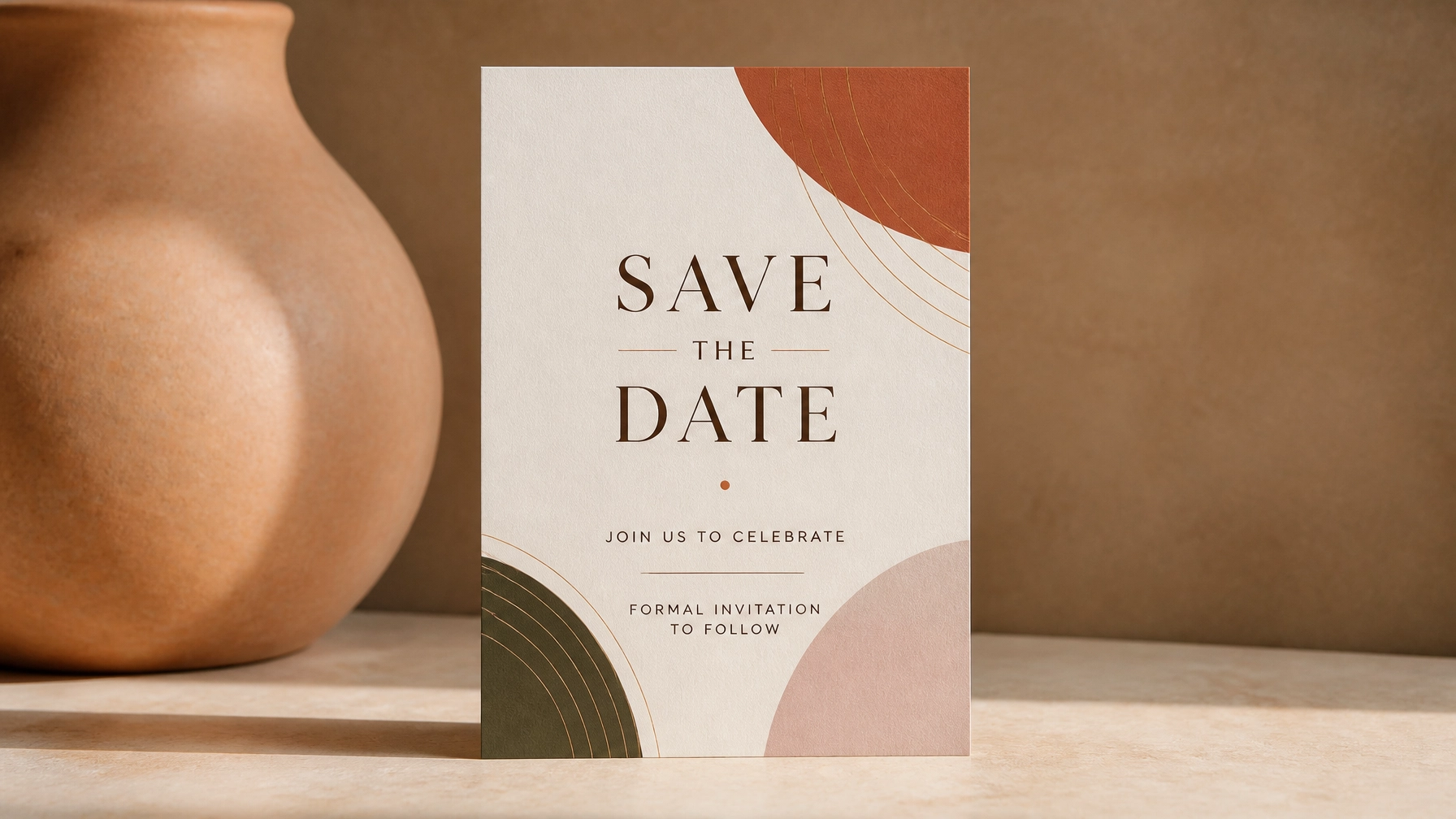
A 5×7 invitation is approximately 125×175mm, making it a practical portrait format for event stationery. It offers more room for essential information than a smaller invitation while remaining easy to display, store and post.
Our 5×7 invitation printing service is designed for customers who need a single flat portrait invitation sheet with a clear, professional finish. It suits everything from weddings and birthday celebrations to business launches, open days and community events.
What size is a 5×7 invitation?
The finished invitation measures approximately:
- 125mm wide
- 175mm high
- Portrait orientation
The size is familiar to many people, which makes it straightforward to handle and easy to pair with suitable envelopes. It also gives you enough space to include the information guests or attendees need without making the layout feel cramped.
A 5×7 invitation can usually accommodate:
- Event names and headings
- Host or organiser details
- Date, time and venue
- RSVP instructions
- Contact information
- Dress code or accessibility notes
- Short schedules or arrival guidance
- Website addresses or QR codes
- Business or organisation branding
“Good event stationery makes the important information easy to find while still giving the occasion its own sense of character.”
The portrait proportions work particularly well when the invitation needs to balance design and practical information. That makes 5×7 invitations printing a useful option for both personal celebrations and organisations arranging formal events.
Why choose 5×7 invitation printing?
The 5×7 format sits between compact and spacious. It is larger than a small postcard-style invitation but more economical to handle than a larger sheet.
This balance makes it suitable when you want:
- A clear hierarchy between the event title and supporting details
- Enough space for a refined design
- Room for RSVP instructions without reducing the type size too far
- A familiar format for postal distribution
- A professional appearance for guests, customers or attendees
- A consistent size across a wider event stationery range
For weddings, the format gives you room for ceremony details, reception information and RSVP instructions. For a birthday or anniversary, it can provide space for celebration details alongside a photograph, illustration or distinctive event theme.
Businesses and organisations can also use the format for:
- Product and service launches
- Client receptions
- Networking events
- Company anniversaries
- Venue open days
- Charity fundraisers
- Training sessions
- Community events
- School and club celebrations
Preparing artwork for a 5×7 invitation
The finished invitation is approximately 125×175mm, but artwork should be supplied at 131×181mm.
That larger artwork size includes 3mm bleed on every edge.
Bleed is the extra area beyond the finished size. It allows background colours, photographs or decorative artwork to extend slightly past the cutting area. The excess is trimmed away during production, helping avoid a narrow unprinted edge if the cut varies by a small amount.
Your artwork checklist
Prepare your file using these settings:
- Artwork size – 131×181mm
- Finished size – approximately 125×175mm
- Orientation – portrait
- Bleed – 3mm on every edge
- Colour – use a print-ready colour setup where possible
- Text – keep all important wording inside the safe area
- File review – check spelling, names, dates and contact details before upload
A safe margin is the space between important content and the finished edge. Keep headings, names, logos, RSVP details and small design elements comfortably inside the trim area. A margin of around 5mm or more inside the finished edge is a sensible working guide, particularly for small text.
Backgrounds and artwork intended to reach the edge should continue into the bleed. Important information should not sit in that outer area.
Planning single-sided and double-sided invitations
The product includes a choice of single-sided or double-sided printing, subject to the live options shown when ordering.
Single-sided printing can work well when all the event details fit comfortably on one face. This keeps the information immediately visible and gives the design a simple, focused presentation.
Double-sided printing can be useful when you want to separate the information into clear sections. For example:
- Front – event title, host details and main visual design
- Reverse – RSVP instructions, timings and practical information
- Front – company or event branding
- Reverse – location details, contact information and access guidance
Before supplying artwork, check that the front and reverse are orientated correctly. Review how the invitation will be held and read, then label your files clearly if you are sending separate artwork pages.

What media can you choose?
The live product page lists a broad range of print media. The best choice depends on the tone of the event, the amount of handling expected and the finish you want.
Available options include:
- 130gsm Silk
- 150gsm Silk
- 250gsm Silk
- 350gsm Silk
- 120gsm Uncoated
- 300gsm Uncoated
- 140gsm Gesso
- 300gsm Gesso
- 400gsm Artboard
- 280gsm Kraft
- 770gsm Magnetic
GSM means grams per square metre. In simple terms, it indicates the weight of the paper or print media. A higher gsm generally feels thicker and more substantial, although the material type and finish also affect how it feels.
Choosing a finish
The available media create different visual and tactile results.
- Silk offers a smooth finish with a gentle sheen.
- Uncoated provides a more natural, tactile surface and can suit understated designs.
- Gesso gives the printed piece a distinctive textured feel.
- Kraft creates a warmer, more informal appearance.
- Artboard provides a firm, substantial result.
- Magnetic media can be useful for specific promotional or display purposes.
If you are unsure which option is appropriate, consider the event first. A formal wedding may call for a smooth or textured premium finish, while a community event may suit a natural uncoated or Kraft appearance. Businesses may prefer a finish that aligns with their existing brand materials.


Lamination and envelope choices
The product page includes the following finishing choices:
- No laminate
- Matt Laminate
- Gloss Laminate
- Soft Touch Laminate
Matt laminate reduces surface reflection and gives a restrained finish. Gloss laminate creates a brighter, more reflective appearance. Soft Touch Laminate provides a smooth, tactile surface.
The live options indicate that lamination can add production time, so check the current selection before ordering if your event has a firm deadline.
Envelope choices include:
- No envelopes
- White envelopes
- Kraft envelopes
A suitable envelope can help protect the invitation during posting and complete the overall presentation. White envelopes create a clean, formal look, while Kraft envelopes offer a more natural and informal feel.
Building useful event information into the design
A strong invitation does more than announce an occasion. It helps people understand what to do next.
For personal events, consider including:
- The type of celebration
- Hosts’ names
- Date and start time
- Venue name and location
- RSVP deadline
- RSVP email address or telephone number
- Dress code
- Parking or access notes
- Dietary or accessibility information
For business and community events, you may also need:
- Organisation name and logo
- Registration instructions
- Programme highlights
- Speaker or activity details
- Booking information
- Contact details
- Website or QR code
- Location and arrival guidance
Keep the wording concise and use headings to create a clear reading order. Decorative typography can add personality, but important practical details should remain easy to read at a glance.
Proofing your invitation before printing
Proofing is one of the most important stages of invitation printing. Check the content carefully before supplying the final artwork.
Pay particular attention to:
- Names and spelling
- Dates and days of the week
- Start and finish times
- Venue details
- Postcodes
- RSVP information
- Telephone numbers and email addresses
- Website links and QR codes
- Copyright permissions for photographs or artwork
- Text contrast and font size
If you are arranging several versions, label each file clearly. The ordering system cannot automatically detect multi-page documents, multiple pages or different designs. You must select the correct quantity when supplying more than one page or design.
Where the live ordering options allow multiple designs, this can be useful for:
- Different guest groups
- Several event dates
- Multiple venues
- Distinct versions for sponsors or partners
- A coordinated event range
5×7 invitations for personal and professional events
The format is particularly versatile because it can be styled in many ways without losing its practical proportions.
Weddings and engagement parties
5×7 wedding invitations can include a formal event heading, ceremony and reception details, RSVP information and a short note about accommodation or travel.
Birthdays and anniversaries
5×7 birthday invitations can use stronger colour, photography or graphic shapes while leaving enough room for the essential event details.
Graduations and christenings
These occasions often benefit from a clear, respectful layout with a prominent date, venue and RSVP section.
Corporate and community events
5×7 event invitations can support a professional identity through consistent colours, typography and logo placement. They work well for launches, open days, networking events, fundraisers and local activities.

Design support and printing from Tavistock
You can supply your own print-ready artwork, or our graphic design team can help develop a suitable layout where required. Design support can be useful when you have the information ready but need help with hierarchy, typography, colour or preparing a file for print.
ABC Service produces printing in-house at 69 West Street, Tavistock, Devon. Local customers can arrange collection, while our printing service supports delivery across the UK.
Our wider invitation printing range includes different formats for different information and design requirements:
- A6 invitation printing for a more compact layout
- A5 invitation printing when you need additional space
- 148×148 invitation printing for a square presentation
- 5×7 invitation printing for a familiar portrait format with a practical balance of space and handling
Summary and Takeaway
5×7 invitation printing provides a dependable format for event stationery. The finished invitation is approximately 125×175mm, while artwork should be supplied at 131×181mm with 3mm bleed on every edge.
The format works well because it offers:
- Enough room for clear event information
- A familiar portrait proportion
- Flexible single- or double-sided printing
- A broad choice of media and finishes
- White, Kraft or no-envelope options
- Suitability for personal, business and community events
Before ordering, prepare the artwork at the correct size, keep essential content within a safe margin and proof every detail carefully. Then check the live product options for the current media, finishing, envelope and despatch choices.
For customers in Tavistock, Plymouth, Devon and nearby areas, local collection is available from our in-house production base. For customers elsewhere, we provide UK-wide delivery for professionally printed event invitations.